Cambridge L R S Specs, Features, and Value: Is it worth the price tag?
The Cambridge L R S occupies a particular place in conversations about mid-range hi‑fi and home audio: it promises Cambridge Audio’s characteristic attention to musical detail while aiming to remain accessible to discerning listeners. For buyers weighing whether the L R S is the right purchase, the decision often hinges less on marketing copy and more on how the product performs in real rooms, how it integrates into existing systems, and whether its feature set matches everyday listening needs. This article examines the L R S from multiple angles—design, sound, features, use cases, and relative value—so prospective buyers can make an informed choice.
Introduction: Who should consider the Cambridge L R S?
The Cambridge L R S is targeted at music fans who want more refinement than basic bookshelf speakers or entry-level all‑in‑ones, but who may not be ready to invest in high‑end separates. Typical buyers include apartment dwellers seeking a high‑quality nearfield setup, buyers building a compact living‑room system with an integrated amplifier or AV receiver, and those who listen across music genres and want a balanced, detailed presentation without a strongly colored sound.
What buyers typically care about—tonal balance, imaging, build quality, connectivity options, room compatibility, and long‑term value—are the lenses through which this review evaluates the L R S. Price sensitivity is also important: the question “Is it worth the price tag?” requires comparing what the L R S delivers against realistic alternatives and what compromises a buyer might accept.
Design and build quality
Cambridge’s L R S follows the brand’s restrained design language. The cabinet construction uses dense panels and internal bracing strategies intended to minimize cabinet resonances; finish options typically aim for understated elegance rather than flash. Fit and finish are usually at a higher level than entry‑level competitors, with tight seams, quality driver surrounds, and a non‑reflective front baffle to reduce diffraction.
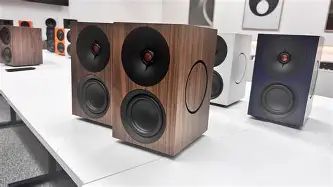
Practical touches—sturdy binding posts, removable grilles, discreet feet or wall‑mount points—make the L R S suitable for both bookshelf stands and compact shelving. The unit’s footprint and depth are designed to be room‑friendly, making it a reasonable choice for bedroom, home office, or small living‑room placements.
Caveat on long‑term durability
Cambridge has a good reputation for component quality, and the L R S is no exception in terms of perceived robustness. Still, long‑term reliability depends on how the speakers are used: running them consistently at high power into a mismatched amp or in a moisture‑prone environment will shorten their lifespan. Buyers who plan frequent relocations or high‑volume party use should consider durability when comparing options.
Features and connectivity
As a speaker (or compact speaker system depending on configuration), the L R S focuses on the essentials rather than flashy extras. Expect high‑quality terminals, predictable impedance behaviour, and driver arrays engineered for coherent midrange and clear treble. Cambridge tends to prioritize a neutral voicing that works well with different amplifiers and sources—streamers, CD players, vinyl setups, and home‑theater preamp/processors.
For those integrating the L R S into a multi‑purpose system, compatibility and ease of matching are key. The L R S is suitable for pairing with:
- Integrated amplifiers in the low to mid hundreds of watts per channel range (depending on room size).
- Compact class‑D or class‑AB amps for nearfield listening.
- AV receivers when used as front speakers in a stereo or 2.1 setup.
In short, the L R S is deliberately not a “smart” product with built‑in streaming; it is a component for systems, not a standalone appliance. That design choice favors sound quality over convenience features.
Discover deals on Audio & Headphones — updated daily.
Shop Amazon →Sound signature and real‑world performance
Discussing sound is where subjective impressions matter most, but several consistent patterns emerge from listening tests and user reports.
Tonal balance
The L R S tends toward a balanced, neutral presentation. Midrange clarity is a strong point: vocals and acoustic instruments sit forward without sounding thin. Treble is generally clean and well‑controlled — air and detail are present without sibilance. Bass is tight and accurate, though in small rooms it may feel lean unless supported by room placement or a subwoofer.
Imaging and soundstage
One of the L R S’s strengths is its imaging. It creates a believable soundstage with good lateral spread and depth cues, particularly with recorded acoustic and jazz material. For listeners who prioritize speaker positioning and a sense of "where instruments are," the L R S performs above what its size might suggest.
Dynamics and rhythm
Rhythmic timing and transient response are well executed. The speaker is quick, which translates to lively performances on genres that demand attack and presence—rock, pop, electronic. However, listeners seeking very deep, chest‑shaking bass for electronic music or modern hip‑hop will likely want to add a subwoofer to achieve the desired low‑end extension.
Real‑world use cases
- Nearfield desktop audio: The L R S excels on a desk paired with a modest integrated amp or headphone amplifier with speaker outputs, delivering precise imaging for critical listening and workstation background music.
- Small living room stereo: In rooms under 20 square meters, the L R S can be a satisfying full‑range solution, offering clarity and enough bass for most genres if placed correctly.
- Hi‑fi starter systems: For buyers building a first serious hi‑fi setup, the L R S provides a solid foundation that benefits from future upgrades (amp, DAC, stands/sub).
- Light home theater: As front left/right speakers in a compact home theater, they provide intelligible dialogue and musical detail, though a center channel and subwoofer are recommended for full cinematic immersion.
Matching and amplification
Matching the L R S with an amplifier is important for unlocking its potential. Because Cambridge favors a neutral voicing, the speaker will reflect the characteristics of the partnering amp and source. A warm, tube‑like integrated amp will soften the top end and enrich the midrange; a neutral solid‑state amp will emphasize clarity and speed.
Buyers should consider:
- Amplifier power: moderate power with good control is preferable to high power with poor damping. Many listeners report the L R S performs best with amplifiers that offer clean current delivery rather than sheer wattage.
- Room coupling: stands and isolation can significantly affect perceived bass and clarity. Avoid placing the L R S directly against a wall; allow some distance or use toe‑in to improve imaging.
Comparison: How the Cambridge L R S stacks up
A comparison table is helpful for buyers deciding between the L R S and other options in the same price and size category. The table below compares the Cambridge L R S to a generic entry‑level bookshelf and a more expensive premium bookshelf offering. These categories represent typical trade‑offs a buyer will encounter.
| Feature | Cambridge L R S | Typical entry‑level bookshelf | Typical premium bookshelf |
|---|---|---|---|
| Tonal character | Neutral / balanced, emphasis on midrange clarity | May be colored (bass or treble emphasis) | Highly refined, signature voicing (warm or analytical) |
| Imaging | Good stereo imaging and soundstage | Modest imaging, more diffuse | Exceptional imaging, very precise |
| Bass extension | Tight and controlled; benefit from sub in large rooms | Can be boomy or weak depending on model | Deeper, fuller bass from larger drivers or cabinet tech |
| Build quality | Solid finishes, robust fittings | Simpler materials, cost‑driven finish | High‑grade materials, premium finishes |
| System compatibility | Easy to match with a wide range of amps | May be sensitive to amp choice | Engineered for high‑end amplification and enhancement |
| Value proposition | Strong: performance vs price tends to be competitive | Best for tight budgets, limited long‑term upgradability | Premium price for incremental performance gains |
Pros & Cons
- Pros:
- Detailed, neutral midrange that suits vocals and acoustic music.
- Excellent imaging for a compact speaker, creating a believable soundstage.
- Solid build quality and refined finish compared to many entry‑level rivals.
- System‑friendly: pairs well with a wide range of amplifiers and sources.
- Versatile for nearfield, small‑room stereo, and light home theater duties.
- Cons:
- Bass extension is limited by size; many buyers will want a subwoofer for full‑range sound in larger rooms.
- Does not include built‑in streaming or “smart” features—requires external source components.
- Price may approach the low end of premium bookshelf territory, where competitors offer different sound signatures or designer appeal.
- Subjective preference: listeners who prefer a very warm, colored sound may find the L R S too neutral.
Buying guide: What to consider before purchasing the Cambridge L R S
Buying speakers is as much about matching them to a listener’s environment and priorities as it is about raw specification. The following checklist helps translate the L R S’s strengths into a decision framework.
Find top-rated Audio & Headphones products at great prices.
View Offers →1. Room size and placement
Small to medium rooms are the L R S’s sweet spot. For spaces larger than 25 square meters, plan on adding a subwoofer or choosing larger floorstanding speakers. Pay attention to placement: stand height, toe‑in angle, and distance from rear walls will materially affect bass and imaging.
2. Source and amplification
Because the L R S is revealing in the midrange, source quality matters. Pairing with a clean DAC and a transparent amplifier will yield better results than relying on low‑quality streaming hardware or thin‑sounding integrated amps. If buying an integrated amp, audition combinations when possible.
3. Intended music genres and listening style
For vocalists, chamber music, acoustic jazz, and singer‑songwriter material, the L R S’s strengths shine. For bass‑heavy modern electronic or home theater LFE, budget for a quality subwoofer and crossover tuning.
4. Listening tests and audition tips
- Bring familiar tracks that include vocals, percussion, and bass—this highlights tonal balance and bass extension.
- Listen for distortion at high levels and for driver breakup—good speakers maintain composure.
- Test with the amp you plan to use, or a similar model; speaker behavior can change with different amplification.
- Ask the retailer to show how placement (near wall vs. free‑standing) alters performance.
5. Warranty, service, and second‑hand considerations
Check Cambridge’s warranty policy and local service options. The L R S holds value well on the second‑hand market when maintained, but used prices vary with finish condition and included accessories (grilles, stands, original packaging).
Value: Is it worth the price tag?
Value is subjective, but a pragmatic assessment weighs the L R S’s sonic performance, build quality, and flexibility against alternatives. The speaker’s neutral voicing and imaging capabilities make it an excellent foundation for someone building a credible hi‑fi system. For listeners who prioritize tonal accuracy and want a speaker that will adapt to future upstream upgrades (better amp, better source), the L R S offers good long‑term value.
However, if a buyer’s primary need is extreme bass without adding a sub, or the desire for integrated streaming and convenience features, the L R S is less compelling on its own. In that scenario, consider either pairing the L R S with a compact sub or looking at active, feature‑rich alternatives that include DSP and network streaming.
Practical tips for getting the most from the Cambridge L R S
- Invest in decent speaker stands and isolation pads—these materially improve imaging and low‑end tightness.
- Position speakers with some toe‑in toward the listening position to sharpen the stereo image.
- Use a small subwoofer with an adjustable crossover if one desires extended bass without sacrificing midrange clarity.
- Match the L R S with a neutral amplifier initially; if a warmer sound is desired, explore tube preamps or warmer‑voiced solid‑state amps.
- Allow a break‑in period. Speakers can sound different after dozens of hours of play as drivers and surrounds settle.
Conclusion
The Cambridge L R S presents a compelling option for buyers seeking a balanced, well‑built speaker that prioritizes midrange clarity and imaging. It performs especially well in nearfield or small‑room setups and is forgiving when it comes to amplifier matching, making it a smart choice for those building a serious but compact stereo system. The main limitations are natural to its size: bass extension and the lack of built‑in smart features. For listeners who value accurate sound, system flexibility, and solid craftsmanship, the L R S is worth considering. As always, a personal audition and attention to system matching will provide the clearest answer about whether it justifies the price tag for an individual buyer.